If you run a website, you already know most people visit from their phones.
But what many don’t know is how big mobile use really is and how fast user habits are changing.
That’s where mobile web design statistics come in. Ignoring them can lead to slow pages, high bounce rates, low trust, and lost sales.
A website that fails on mobile quietly pushes people away without warning.
In this blog post, you’ll see 10 clear mobile web design statistics that explain how people use websites on their phones in 2026.
You’ll learn why speed, layout, and ease of use matter so much, and how these numbers affect traffic, SEO, and conversions.
By the end, you’ll know exactly what mobile users expect and what your website must do to keep them.
Let’s get into it…
In this article
Mobile usage and behavior statistics
62.54% of all web traffic now comes from mobile devices
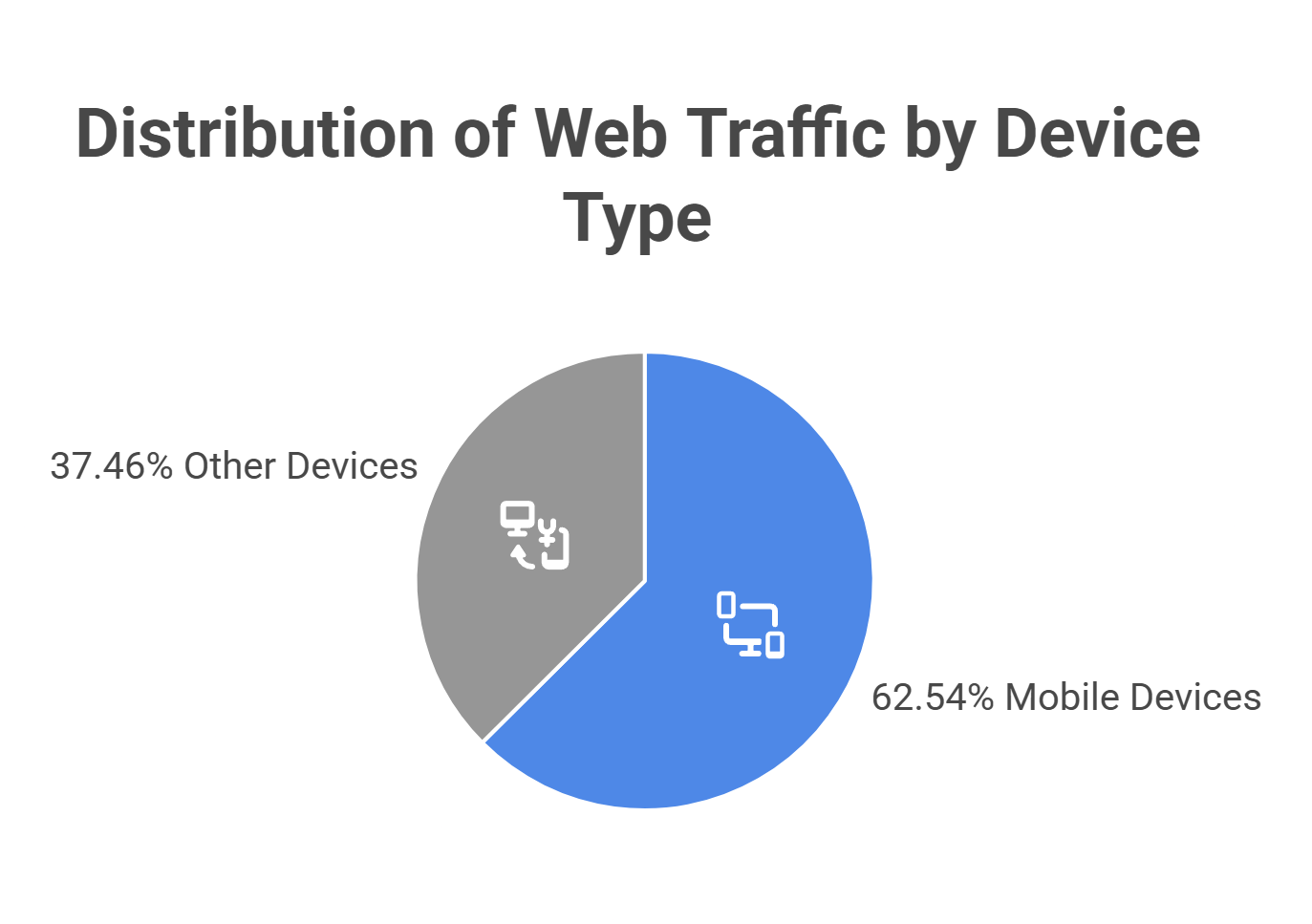
This means that more than half of the people visiting websites today are doing so with their phones, not laptops or desktops.
Think about how often you pick up your phone to search for something quickly. That’s exactly what most people are doing.
Phones are always nearby, easy to use, and faster to pull out than a computer. So if a website does not work well on mobile, it is already failing more than half of its visitors.
A business that ignores mobile users is basically turning away most of its audience before they even read a word.
Over 84% of visitors prefer browsing websites on mobile rather than desktop
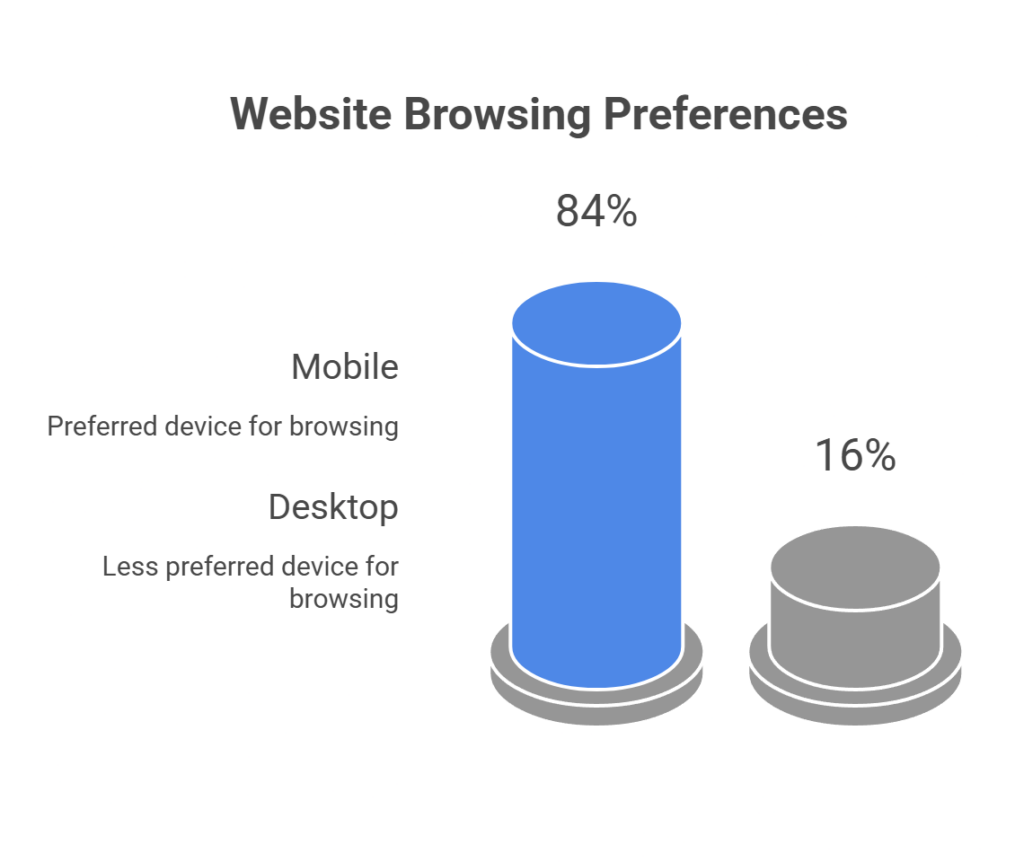
Most people would rather use their phone than sit in front of a computer.
Phones fit into daily life better. People browse while lying in bed, waiting in line, or relaxing on the couch.
This stat shows that mobile is no longer a backup option. It is the main choice.
When a website looks bad or feels hard to use on a phone, users feel annoyed because it goes against how they prefer to browse. They expect smooth scrolling, easy reading, and simple buttons on their mobile screens.
About 74% of shoppers use their smartphones to research products while inside physical stores
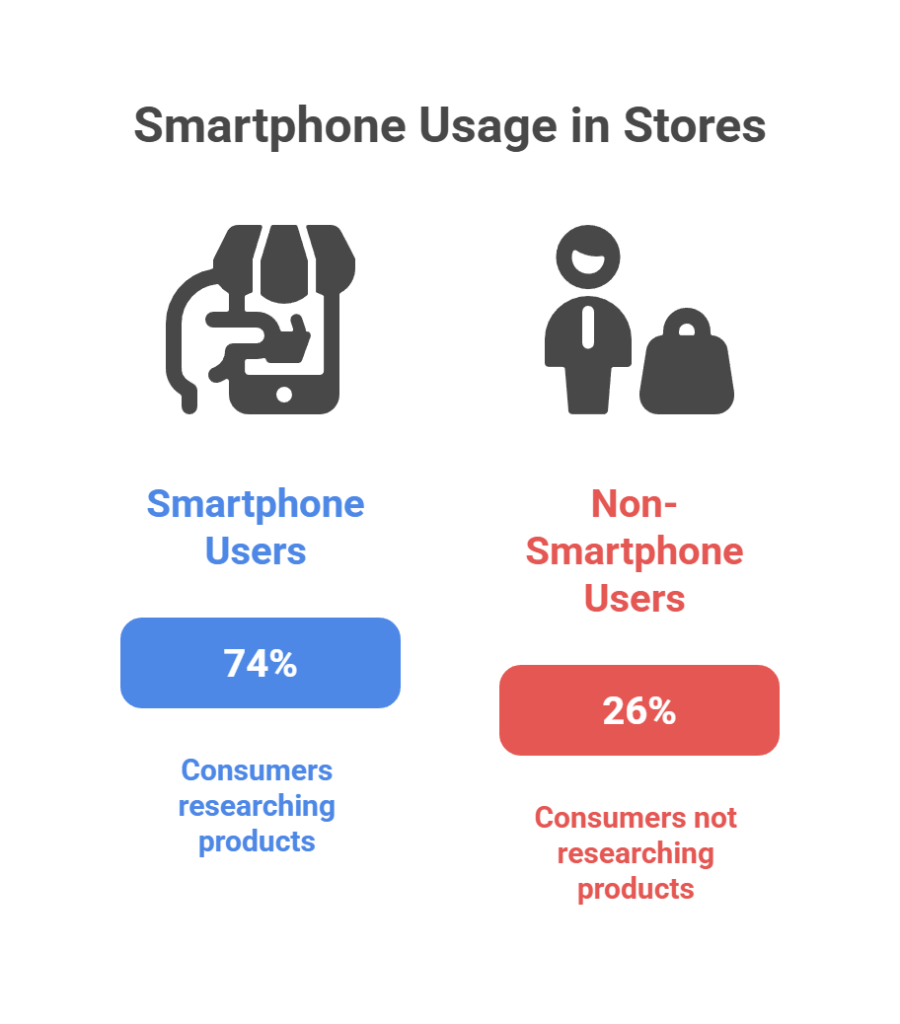
This shows that people don’t stop using their phones even when they are already in a shop.
Many shoppers stand in stores and check prices, reviews, or product details on their phones before buying. If your website loads slowly or looks broken on mobile, you lose these ready-to-buy customers.
They may walk out or choose another brand right there.
A mobile-friendly site helps answer quick questions like price, features, or trust. Without it, customers feel unsure and may not buy at all.
Mobile performance and speed expectations
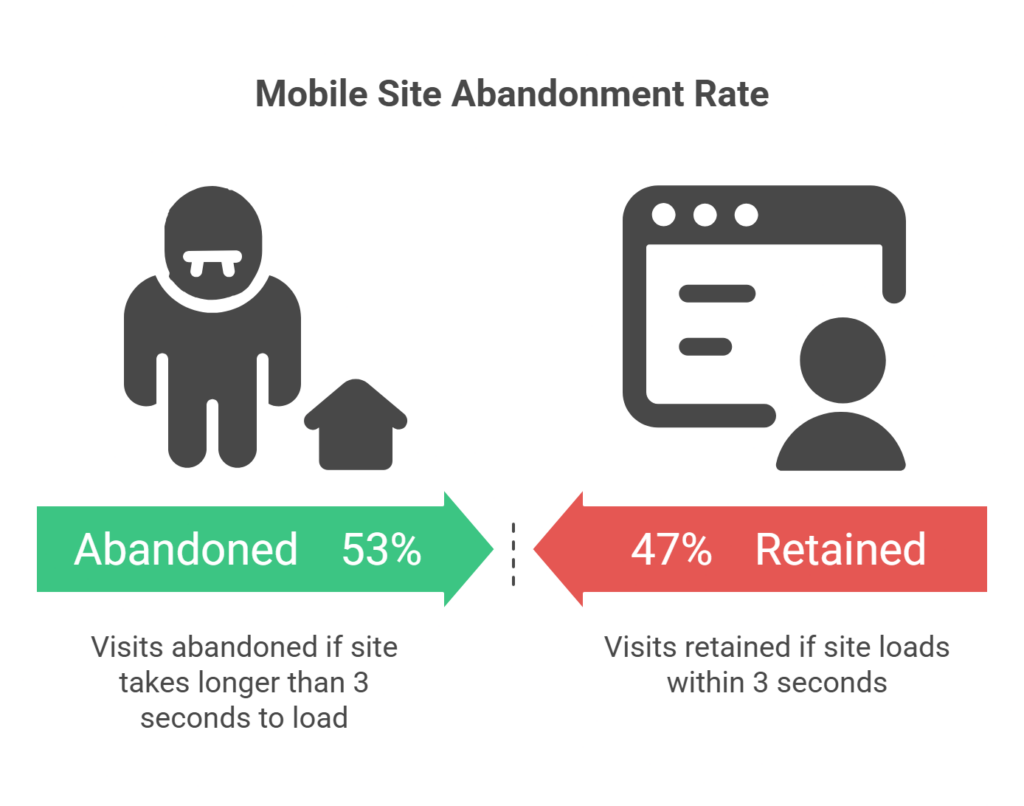
53% of visits are abandoned if a mobile site takes longer than 3 seconds to load
People are impatient on mobile.
When someone taps a link, they expect the page to open almost instantly. If it takes more than three seconds, more than half of users will leave without waiting.
They don’t care how good your offer is if the page feels slow. They simply close it and move on. This means speed is not a “nice to have.” It directly decides whether people stay or leave.
A slow mobile site silently kills traffic, trust, and sales without you noticing.
Mobile usage records a higher bounce rate at 59.74% compared to 49.80% on desktop
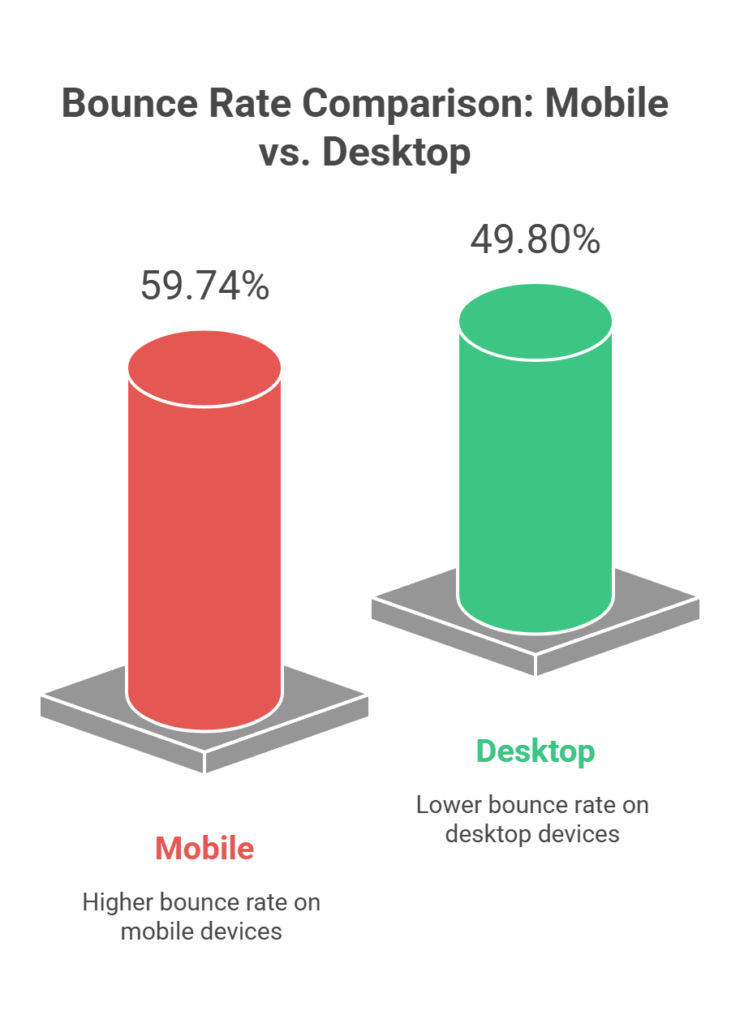
Bounce rate means people leave a website without clicking anything else.
This stat shows that mobile users leave faster than desktop users. Why?
Small screens, slow loading, tiny text, and hard-to-tap buttons push people away.
When a mobile site is not clear or easy, users don’t try to figure it out. They just leave.
A high mobile bounce rate is a warning sign that the site is frustrating on phones. Fixing layout, speed, and clarity can keep visitors around longer.
User experience and engagement impact
45% of users often have a poor experience on non-mobile-optimized websites
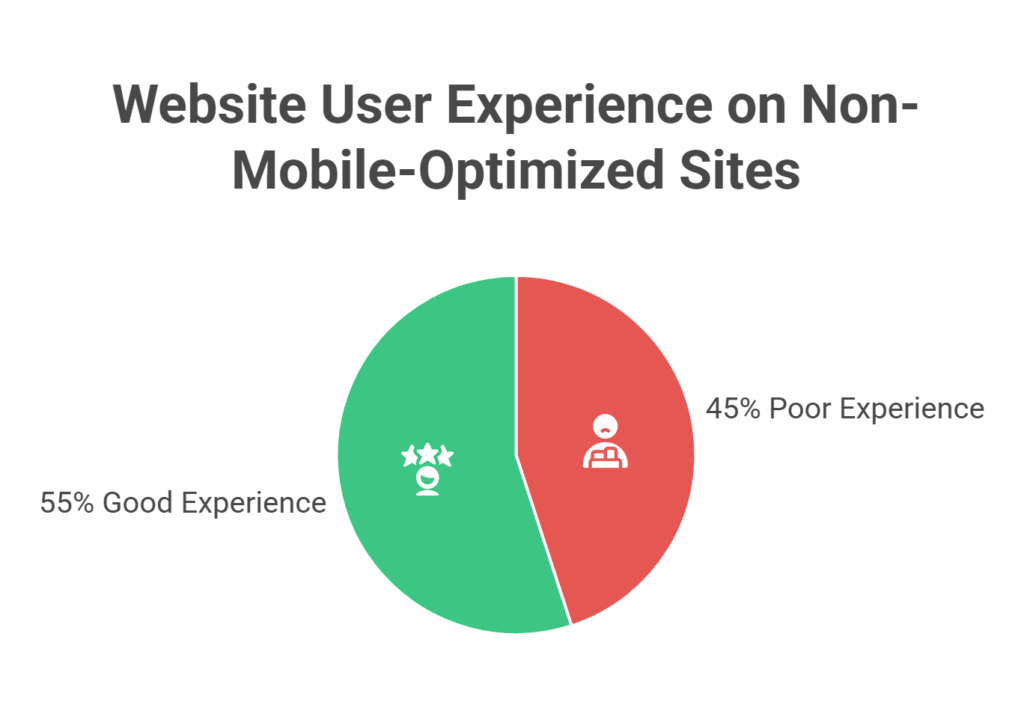
Almost half of users struggle when a website is not built for mobile.
This could mean text is too small, buttons are hard to tap, or pages don’t fit the screen properly. Users may need to zoom in, scroll sideways, or fight with the layout.
These small problems add up and feel annoying. When people feel stressed using a site, they don’t enjoy the visit.
A poor mobile experience makes the business look careless, even if the product itself is good.
52% of users say a bad mobile experience makes them less likely to engage with a company
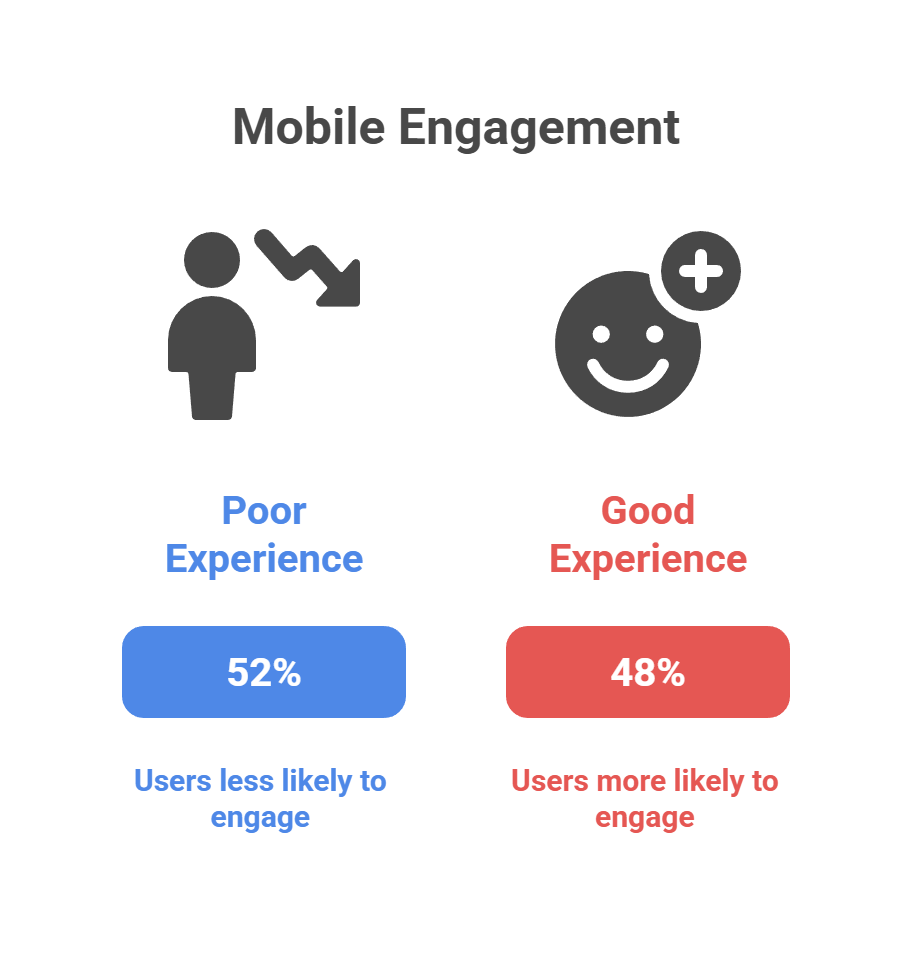
Engage means things like reading more pages, signing up, or contacting the business.
This stat shows that bad mobile design does more than annoy people. It pushes them away from the brand.
When a site feels confusing or slow, users assume the company is not serious or reliable. They hesitate to trust it. Even if they like the product idea, the poor experience stops them from taking action.
Mobile design directly affects how people feel about a business.
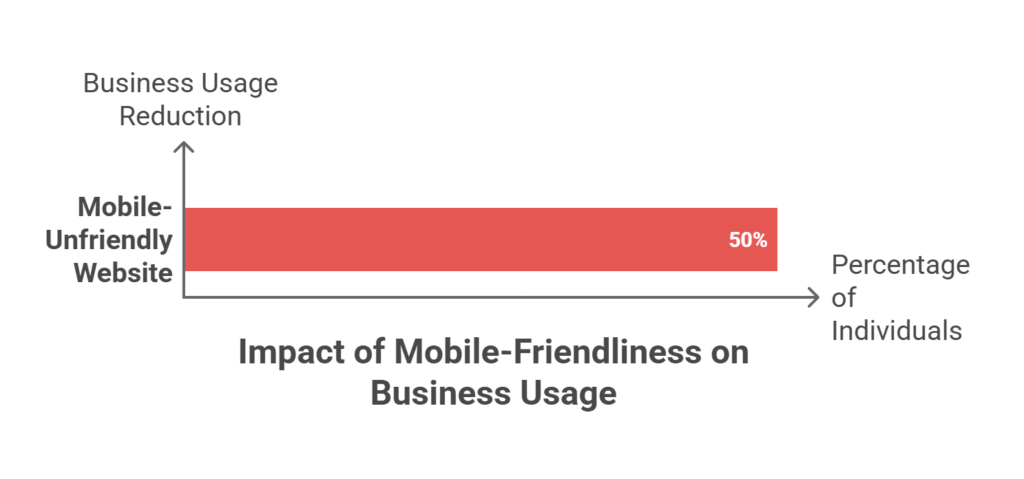
50% of people will use a business less often even if they like it, if the website isn’t mobile-friendly
This is very important.
It means that liking a business is not enough. If the website is hard to use on mobile, people slowly stop coming back.
They may still like the brand, but they choose easier options instead. Convenience always wins.
When another business has a smoother mobile site, users switch without thinking twice.
A bad mobile site quietly reduces repeat visits and long-term customers, even when the business is doing everything else right.
SEO and optimization adoption
62% of top-ranking websites actively prioritize mobile optimization
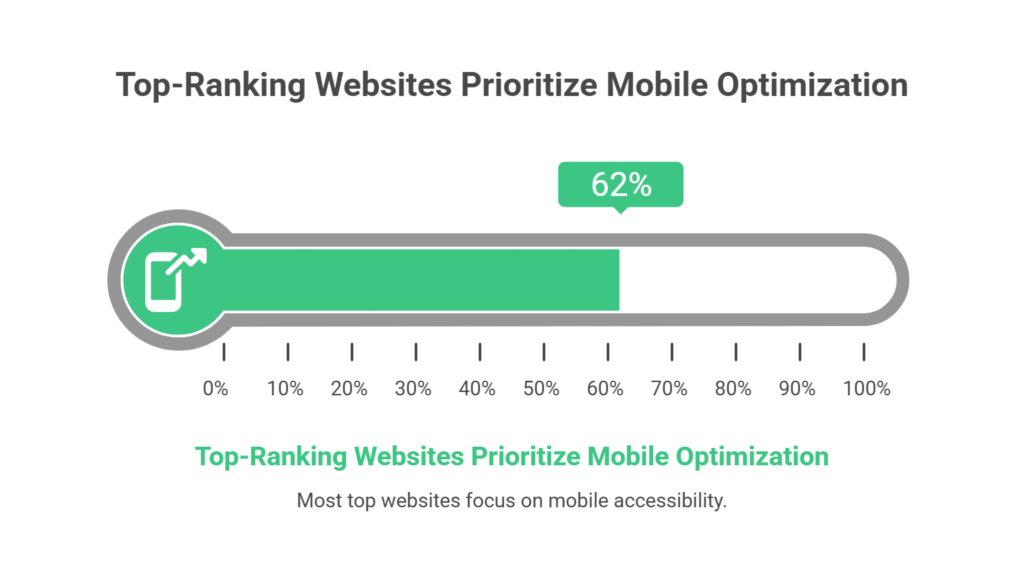
This means most websites that appear at the top of Google are designed with mobile users in mind.
Google favors websites that work well on phones because that’s where most users are. If your site is not mobile-friendly, it becomes harder to rank high in search results.
Top websites invest in mobile layout, speed, and usability because it helps them get more traffic.
Mobile optimization is no longer optional if you want to compete and be seen online.
Conversion and revenue impact
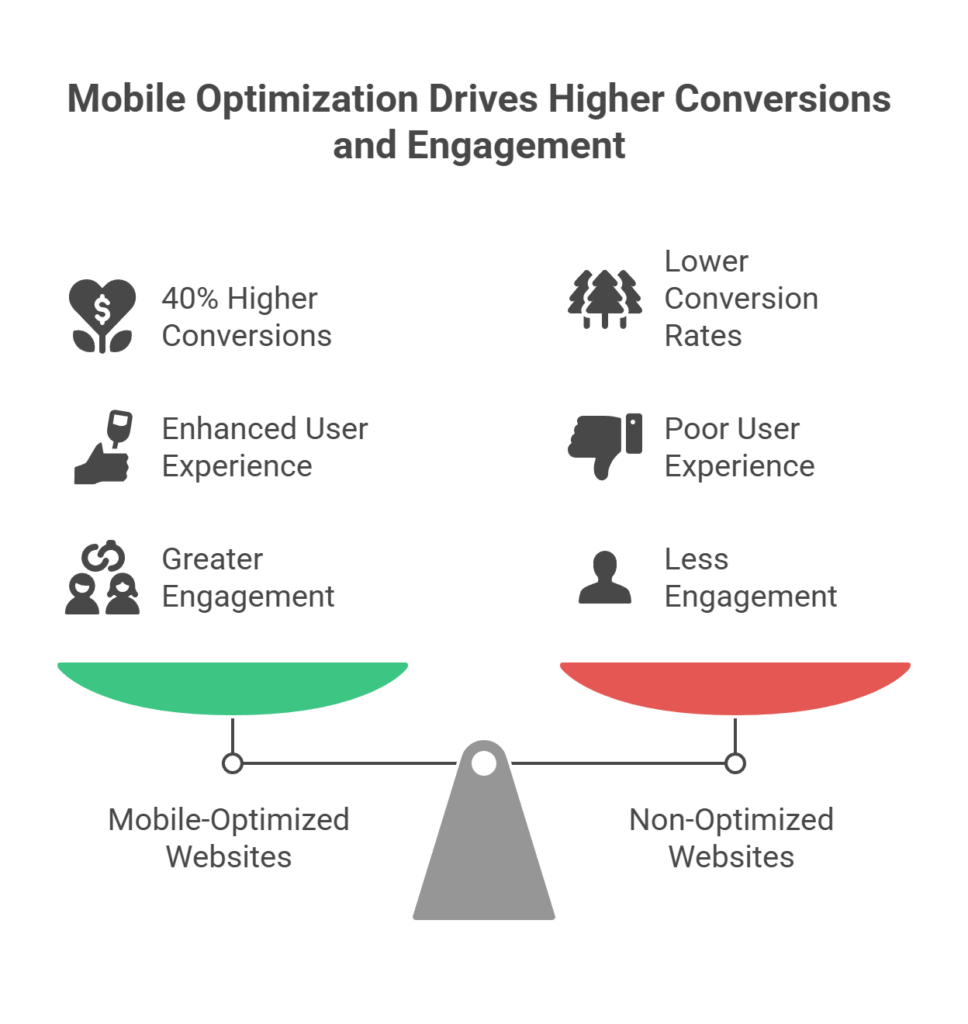
Mobile-optimized websites can achieve up to 40% higher conversions than non-optimized sites
Conversions mean actions like buying, signing up, or booking a service.
This stat shows that a mobile-friendly site doesn’t just look good, it makes more money.
When a site is easy to use on mobile, people feel comfortable taking action. Buttons are clear, forms are simple, and pages load fast. All of this removes friction.
A non-optimized site loses sales because users give up. A mobile-optimized site turns visitors into customers much more often.
Wrapping up
By now, it’s clear that mobile design is not optional anymore.
Most people visit your site on their phone, and they leave fast if it feels slow or hard to use. These stats show one simple truth:
If your site fails on mobile, you lose traffic, trust, and sales.
If you’re an agency that wants clean, fast, mobile-ready websites without extra stress, Block Agency can help.
We design websites as white-label services, so you can serve clients better and grow with ease.
Talk to us here: hey@blockagency.co
Frequently asked question
What is a mobile-friendly website?
A mobile-friendly website fits well on phone screens and is easy to use. Text is readable, buttons are easy to tap, and pages load fast. Users do not need to zoom or scroll sideways. Everything works smoothly on small screens without confusion.
How does mobile web design affect SEO?
Mobile web design affects SEO because search engines favor websites that work well on phones. Mobile-friendly sites load faster and are easier to use. These factors help websites rank higher in search results, attract more visitors, and reduce bounce rates from mobile users.
How does mobile web design affect user experience?
Mobile design affects how easy a website feels on a phone. Bad mobile design causes small text, slow pages, and hard buttons. Good mobile design makes pages clear, fast, and smooth. When users enjoy the experience, they are more likely to stay and take action.