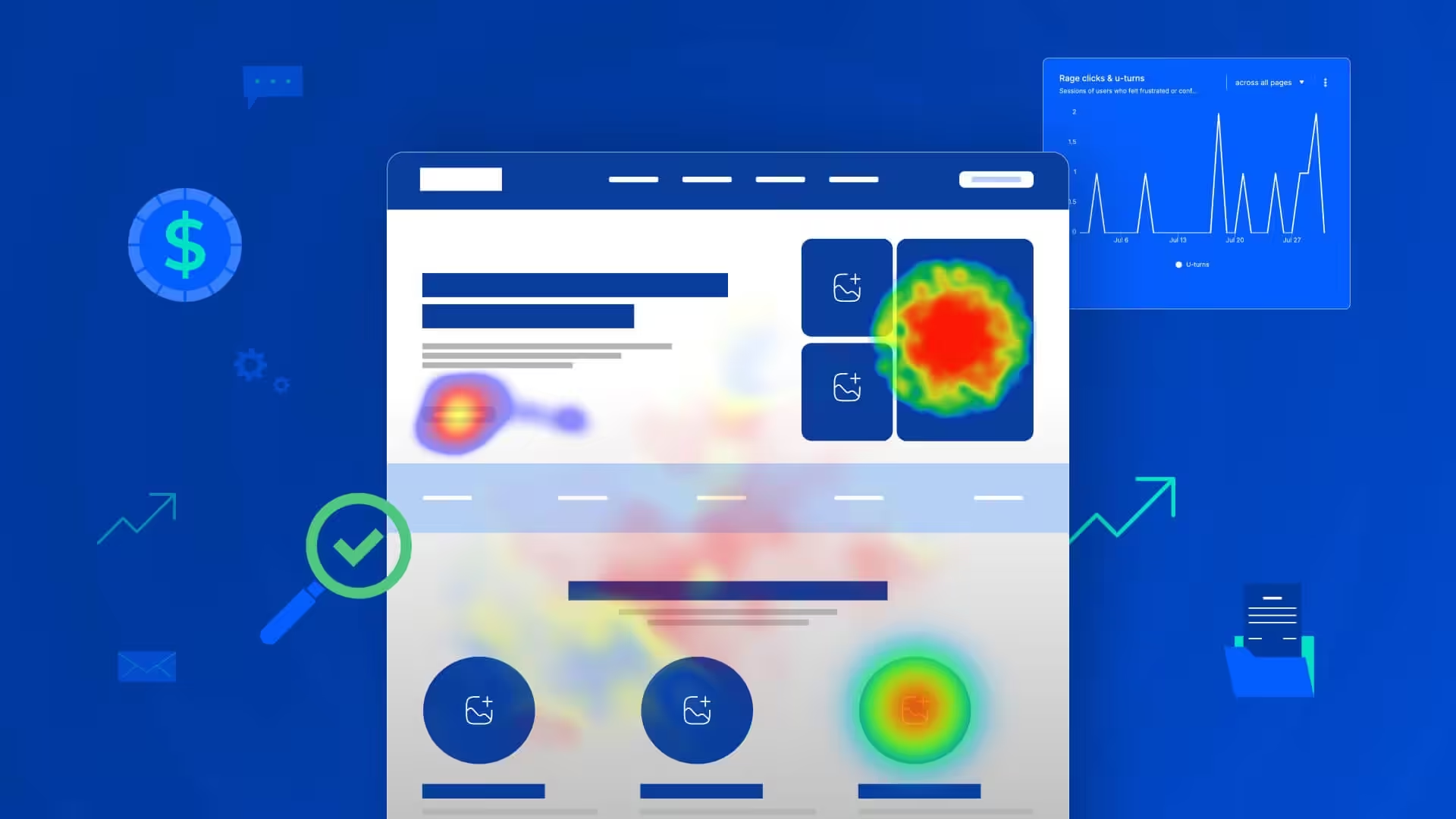
If users are leaving your website or app and you don’t know why, you’re probably thinking about getting a UX audit service.
You want to know which agency can actually find the real problems and help fix them.
But choosing the wrong agency can waste money, delay growth, and leave the same issues untouched. A weak audit gives you a long report… but no real improvement.
In this blog post, you’ll discover the top 15 agencies offering UX audit service, what makes each one different, and who they are best for.
By the end, you’ll know which agency fits your product, your budget, and your growth stage.
Let’s get into it…
In this article
1. Block Agency
At Block Agency, we don’t just do UX audits; we’re a full website design partner for agencies.
That means in addition to UX audit insight, we design UI/UX, write conversion-focused copy, and build WordPress sites.
We serve agencies that need white-label support, delivering work your team can brand as their own.
All work is done async, so you get flexible timelines, and every team member is a senior professional with real experience.
Pros of working with us
- We pair UX audits with real strategy and design that turns insights into results.
- You can scale faster without hiring full-time designers, developers, or writers.
- Our async workflow fits different time zones and team rhythms.
- Every deliverable comes from senior experts.
Cons of working with us
- If you need very fast in-person meetings, async work may feel slower.
- We’re deeply focused on agencies; direct product companies might want a partner more centered on internal execution.
Best for: Agencies looking to white-label UX audits plus design, development, and copy for clients.
Your client needs an UX audit?
Let’s help you: hey@blockagency.co
2. Headway
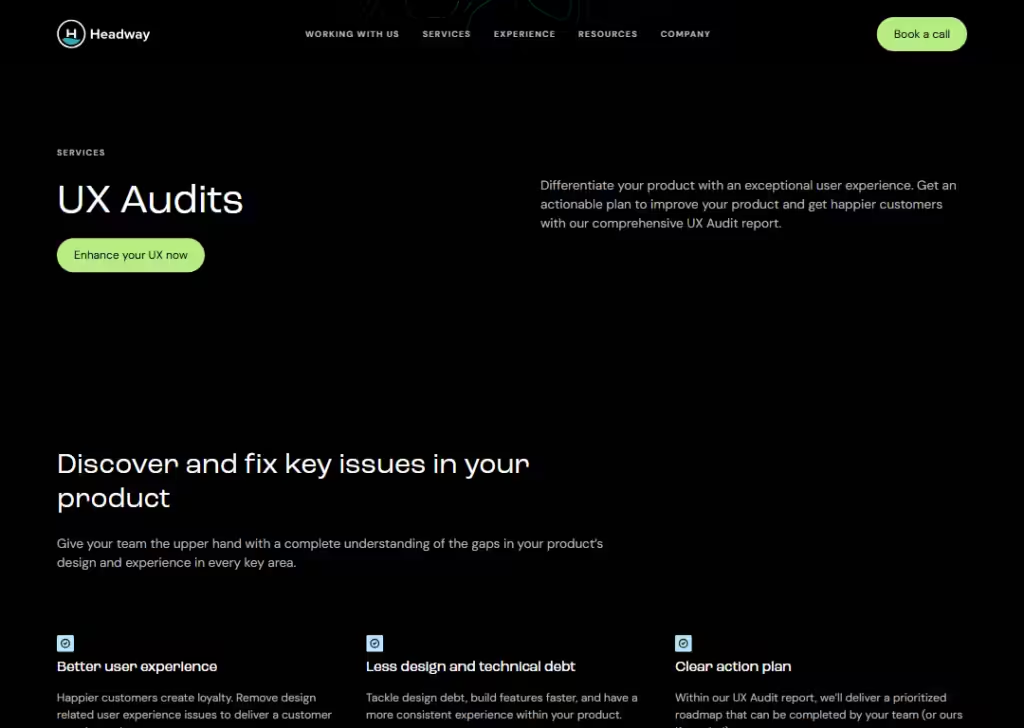
Headway offers a structured UX audit service to help companies find problems in their product design and fix them.
Their audit digs into usability issues, accessibility, navigation patterns, and visual consistency. You get a prioritized report with actionable suggestions plus a road map for what to improve next.
Pros of working with them
- They break audits into clear phases like discovery, analysis, and action planning.
- Reports include specific steps for fixes, not just vague feedback.
- Multiple packages let you choose quick or deeper audits.
- They include accessibility and competitor reviews.
Cons of working with them
- Pricing and timeline can vary widely depending on scope.
- Their focus is more traditional audit work… less if you want design fixes right away.
- Communication style may feel formal for smaller teams.
Best for: Teams and product owners who want a thorough UX report with an action plan.
3. Make It Clear
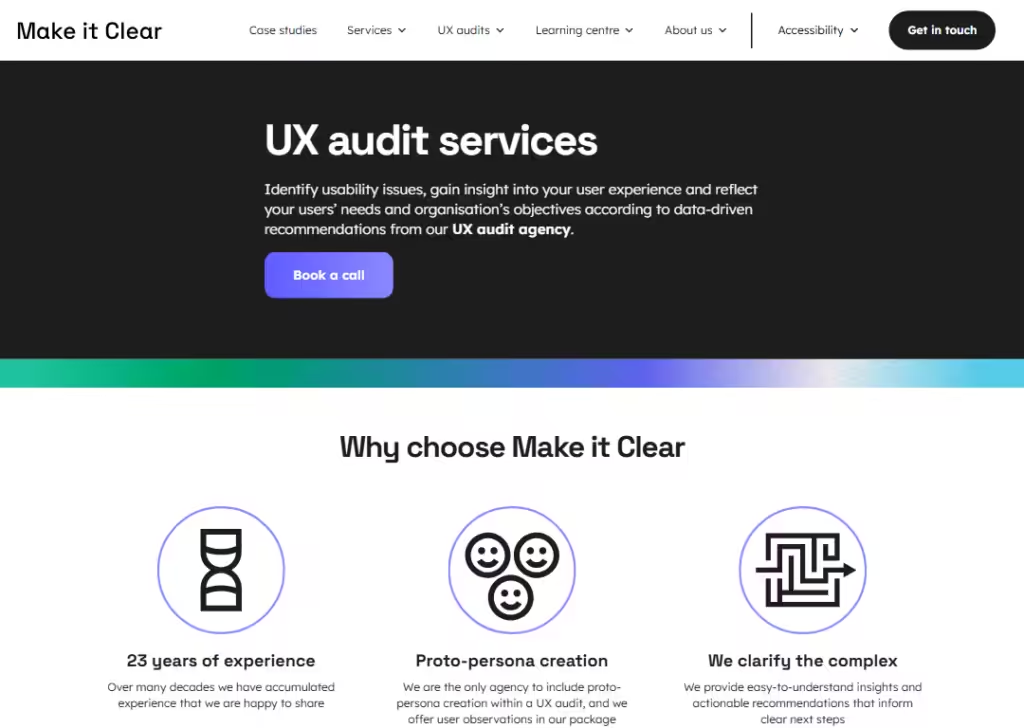
Make It Clear’s UX audit focuses on spotting usability issues and aligning your product with user needs and business goals.
They combine user observation, workshop discussions, and expert evaluation to make a clear list of usability problems and what you should fix.
Their service also includes proto-personas, which are simple user profiles to help you understand who users really are.
Pros of working with them
- They have lots of experience (decades in UX).
- Their approach uses real user observation, not just theory.
- They translate insights into easy-to-understand actions.
- Audits highlight both usability and business goals.
Cons of working with them
- Their audit may take longer, especially for big products.
- They explain things in depth… great for strategy but might feel heavy for quick tactical fixes.
Best for: Businesses that want a deep, research-backed UX audit tied to real user behavior and goals.
4. Qubstudio
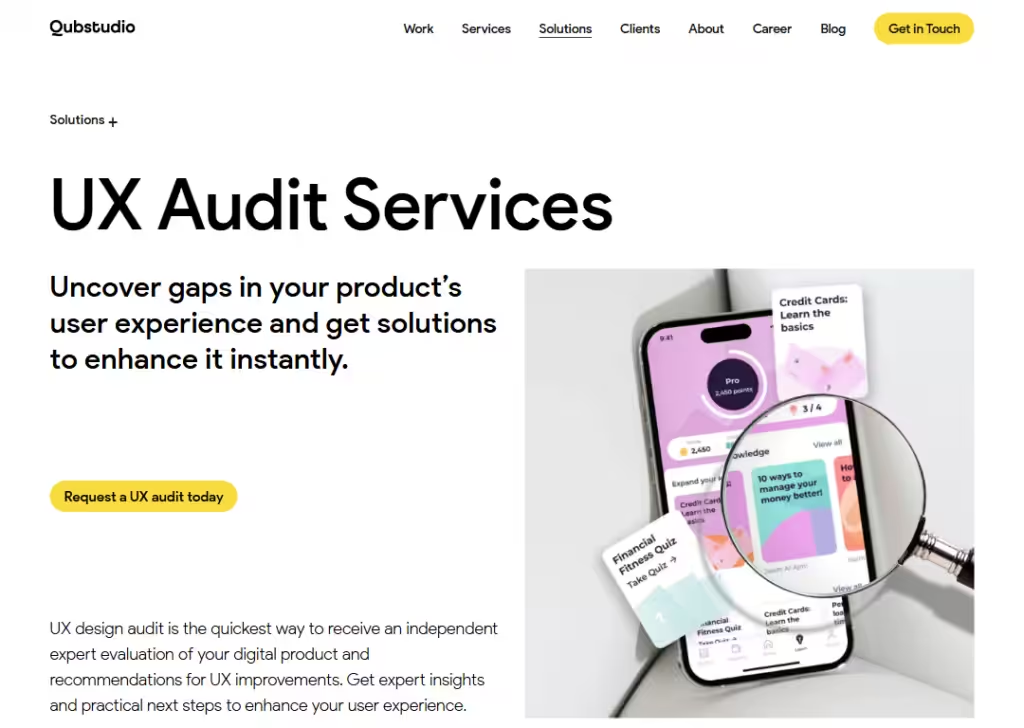
Qubstudio’s UX audit is a hands-on review of your product’s user experience, focusing on usability, navigation, and user flow issues.
They start by talking with your team, then do a heuristic evaluation of the product and deliver a report with clear recommendations.
They also do market research and competitor comparisons to make sure fixes make sense in your industry.
Pros of working with them
- The audit includes stakeholder sessions and research, not just checklist review.
- They connect audit findings with market context and trends.
- You get a presentation and next-step plan that your team can act on.
- Their team has long UX experience and many case studies.
Cons of working with them
- Because they do a full process, it can be more time-intensive.
- The audit may focus mainly on usability rather than full redesign execution.
Best for: Products and teams that want a holistic UX review with strategic context and actionable recommendations.
5. AdvaitUX
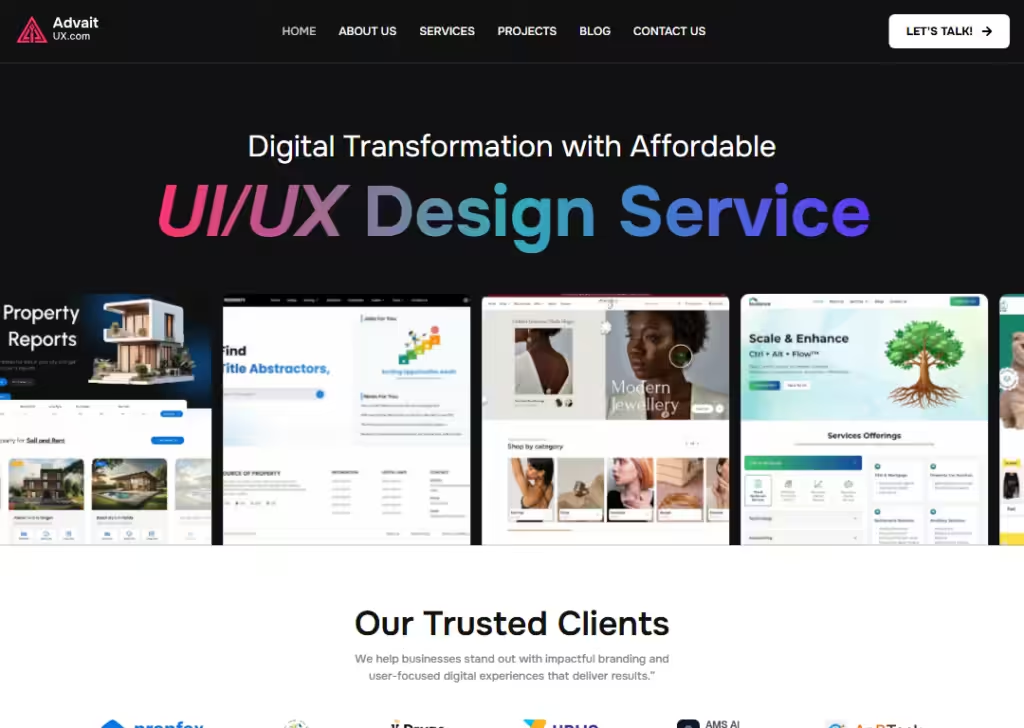
AdvaitUX offers UX audit as part of a broader design service. Their audit dives into usability gaps and interaction problems and tells you where users get stuck.
The goal is to find issues that affect conversion, retention, and ease of use, and give you clear recommendations to fix them.
Pros of working with them
- UX audit fits into a bigger design and branding package you can choose.
- It’s practical if you want a later redesign, not just a report.
- Their services cover mobile apps, web apps, and SaaS platforms as well.
Cons of working with them
- There’s no many process details or deliverables for audits.
- May require follow-up work for deeper analysis or implementation.
Best for: Small to mid-sized businesses that want UX audit plus design work together.
6. Eleken
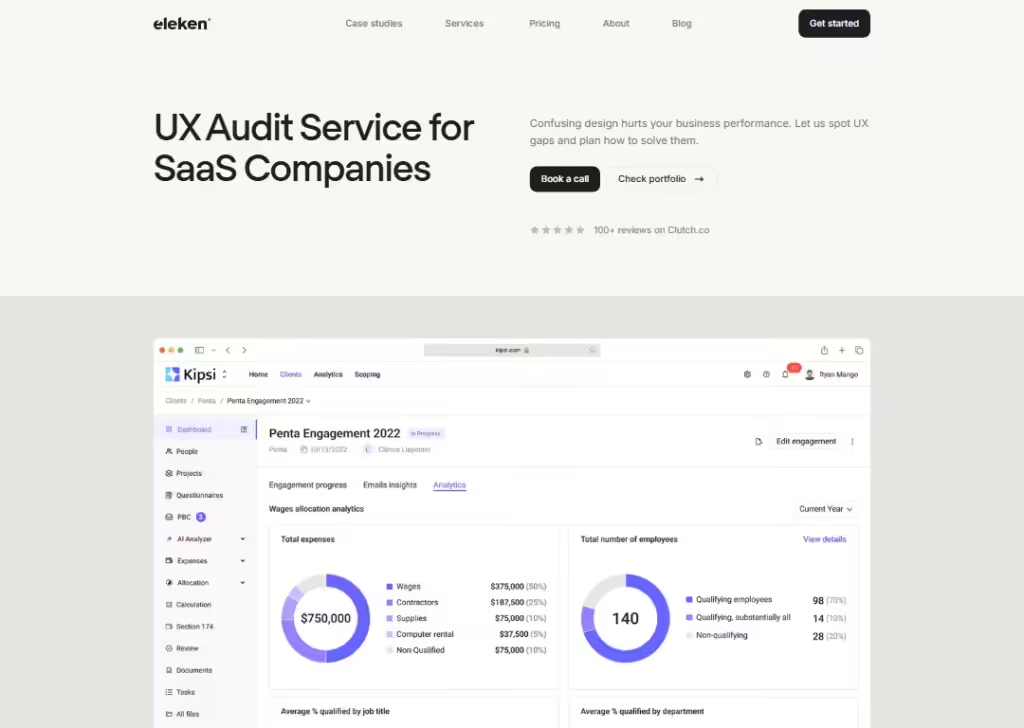
Eleken offers UX audit as part of a deep UX/UI design process mainly for SaaS products.
Their audit is not a quick checklist… they actually talk with your team, map out user flows, interview users or support teams, spot real pain points, and then help you understand what’s broken and why it matters.
They also help prioritize fixes with their team using an impact/effort matrix so you know exactly what to tackle first.
Pros of working with them
- They include UX audits inside a broader redesign service, not just a stand-alone report.
- Focused on actionable outcomes and product thinking.
- Their designers are vetted for communication and real experience, so collaboration is smoother.
- Includes user research and real client examples showing measurable improvements.
Cons of working with them
- UX audit isn’t sold separately… it’s baked into wider design work.
- It’s more focused on SaaS than other product types, which might not suit all businesses.
Best for: SaaS companies that want a research-backed UX audit tied to real design improvements.
7. Pencil & Paper
Pencil & Paper positions their UX audit as a structured review meant for larger enterprise products and complex systems.
Their service gives you a clear understanding of strengths and weaknesses in design, with a ranked list of UX issues and a roadmap for what to improve first.
Pros of working with them
- They have a systemised process focused on prioritizing design work and clarifying what’s truly important to fix.
- Good if your product has grown messy over time and needs a fresh, expert lens.
- They specialize in enterprise and complex UX contexts, where simple audits may miss the big picture.
- Their audit can help realign teams that disagree on design direction.
Cons of working with them
- Process and language can feel a bit formal if you just want a quick review.
- Their focus is mainly on software platforms, not simpler sites or apps.
Best for: Enterprises or mid-sized tech teams with complex products needing clarity and alignment on UX work.
8. Onething Design
Onething Design offers UX audit services that go beyond just spotting problems; they also include UI review, usability testing, and conversion rate optimization.
Their audits target websites, apps, and e-commerce platforms by finding where users struggle and suggesting changes to make flows smoother and more intuitive.
Pros of working with them
- Their UX audit includes testing with real users and measurable results like conversion lift and reduced bounce.
- They provide UI audit in addition to UX, so visuals and layout issues get flagged too.
- They cover e-commerce, web app, and mobile audits, so it’s broad in application.
- They tie audit findings to conversion optimization strategies.
Cons of working with them
- Their reporting style focuses on metrics, which may feel technical if you just want simple insights.
- Less emphasis on strategy documentation for long-term design changes.
Best for: Teams looking for a data-driven UX and UI audit with a strong conversion focus.
9. Code Theorem
Code Theorem’s UX audit service reviews usability, journeys, and behavior patterns to find where users get stuck or confused.
They combine heuristic evaluation, heatmap analysis, usability testing, and conversion optimization to give you a detailed audit report and roadmap for improvements.
Pros of working with them
- Provides a comprehensive set of methods (heat maps + testing + heuristics).
- Their audits connect UX findings to business impact like conversions and engagement.
- They serve many industries and have a good retention rate with clients.
- They offer transparent reporting and follow-up recommendations.
Cons of working with them
- It’s more traditional and less collaborative if you want design work included.
Best for: Teams that want a data-rich UX audit with several research techniques and clear steps to improve.
10. DreamX Web
DreamX’s UX audit service looks at your website or app to uncover usability issues, UX flow problems, and barriers users face.
They review desktop and mobile designs, document issues, and provide actionable suggestions to improve user experience and make your product stronger and more competitive.
Pros of working with them
- Offers audits for websites, web apps, mobile apps, and e-commerce, so it’s flexible.
- Their process includes research and reporting with clarity on UX strengths and weaknesses.
- Competitive pricing and transparency in communication are highlighted.
- Good for both small and larger projects.
Cons of working with them
- Less emphasis on specialized UX research like user interviews.
Best for: Businesses of all sizes that want a broad UX audit covering multiple platforms.
11. BelVG
BelVG offers UX audit services focused mainly on eCommerce websites and complex platforms.
Their goal is to find usability issues that stop users from buying or completing actions. They review user journeys, navigation, checkout flow, mobile experience, and overall interface clarity.
After the audit, they provide a detailed report with problems, explanations, and recommended fixes.
They also connect UX problems directly to conversion performance and sales impact.
Pros of working with them
- Strong focus on eCommerce UX, especially Magento and Shopify projects.
- They connect UX improvements to conversion and revenue growth.
- Technical background helps them understand platform limitations.
- They can also implement fixes after the audit.
Cons of working with them
- Heavily focused on eCommerce… less ideal for SaaS-only products.
- Reports can feel technical for non-technical teams.
Best for: Online stores and eCommerce brands that want to improve conversions and checkout flow.
12. Zazz

Zazz provides UX audit services for mobile apps, websites, and enterprise platforms.
Their audit process includes reviewing user flows, design consistency, usability gaps, and accessibility issues.
They also look at user behavior and product performance to understand where friction happens. After analysis, they deliver a structured report with prioritized fixes and recommendations.
Zazz positions their audit as a way to improve engagement, retention, and overall product experience.
Pros of working with them
- Covers both mobile apps and web platforms.
- Strong experience with enterprise and large-scale systems.
- Provides structured documentation and improvement roadmap.
- Can move from audit into redesign and development.
Cons of working with them
- Enterprise focus may not suit very small startups.
Best for: Businesses with growing apps or platforms that need structured UX improvement.
13. Purrweb
Purrweb offers UX audit services focused on startups, SaaS, and digital products.
Their audit looks at user flows, usability problems, onboarding issues, and interface clarity.
They aim to find friction points that slow users down or reduce conversions. After reviewing the product, they provide a clear report with prioritized recommendations.
They often combine audit insights with design improvements if needed.
Pros of working with them
- Startup-friendly approach.
- Strong experience with SaaS and MVP products.
- Clear recommendations, not just problem lists.
- Can continue into UI/UX redesign work.
Cons of working with them
- May focus more on product UX than content clarity.
Best for: Startups and SaaS founders who want practical UX improvements without heavy process.
14. Fivecube Agency
Fivecube offers UX audit services for digital products, websites, and SaaS platforms.
Their audit reviews usability, navigation logic, user flows, and design consistency. They analyze how users interact with the interface and identify areas that create confusion.
The final deliverable includes a structured report with suggestions and improvement priorities. They also offer UI design and branding services beyond the audit.
Pros of working with them
- Strong visual and UI design background.
- UX audit connects smoothly into redesign.
- Works across industries and product types.
- Clear documentation and actionable suggestions.
Cons of working with them
- More design-focused than research-heavy.
Best for: Companies planning a redesign and wanting UX insights before rebuilding.
15. Dinarys

Dinarys provides UX audit services mainly for eCommerce and digital commerce platforms.
Their audit reviews customer journey, checkout flow, product pages, navigation, and mobile responsiveness. They aim to identify usability gaps that affect sales and engagement.
After analysis, they deliver a report outlining UX weaknesses and specific changes to improve user experience and conversion rates.
Pros of working with them
- Strong focus on online retail and digital commerce.
- Understands technical eCommerce systems.
- Ties UX improvements to business goals.
- Can implement improvements after the audit.
Cons of working with them
- Mostly commerce-focused, not general SaaS UX.
Best for: eCommerce brands wanting to improve user journey and increase sales.
Wrapping up
Some agencies are great for SaaS. Some are strong in eCommerce. Some focus on research. Others focus on fast improvements.
So ask yourself:
- Do I just need a report?
- Or do I need a partner who can also fix the problems?
The right choice will save you time, money, and lost users.
Pick the one that fits where you are right now, not just where you want to be.
Frequently asked questions
Why is a UX audit important?
A UX audit helps find hidden issues that reduce conversions and user satisfaction. Many users leave because of small problems like unclear buttons or slow pages. An audit shows what is wrong and gives steps to improve engagement, retention, and overall performance.
What does a UX audit service include?
A UX audit service usually includes expert review, user flow analysis, navigation checks, usability testing, and a detailed report. Some agencies also review mobile experience and accessibility. The final result is a list of problems and clear suggestions ranked by priority and impact.
How long does a UX audit take?
A UX audit can take one to four weeks, depending on the product size. Small websites may need less time. Large SaaS platforms or eCommerce stores may take longer. The timeline depends on research depth, number of pages, and reporting detail.
Who needs a UX audit service?
Startups, SaaS companies, eCommerce brands, and growing businesses need a UX audit service. It is helpful when conversions drop, users complain, or engagement is low. It is also useful before a redesign to understand what should be improved.
What is the difference between UX audit and UX redesign?
A UX audit reviews a product and identifies problems. A UX redesign changes the interface and user flows to fix those problems. The audit gives insights and recommendations. The redesign applies those changes to improve usability and performance.