In this article
What is a positioning statement?
A positioning statement is a short internal statement that explains how your brand wants to be seen in the market. It defines who you serve, what category you belong to, what makes you different, and why customers should believe you.
Think of it as the foundation behind your messaging, marketing, sales, and product decisions. It keeps everyone in your company aligned.
Unlike a slogan or tagline, a positioning statement is usually not written for the public. It is written for your team, so every campaign, landing page, product update, and sales pitch communicates the same clear message to the right audience consistently.
Why is positioning statement important in branding?
A strong positioning statement helps people quickly understand why your brand matters and why they should choose you instead of competitors.
Today, customers are overwhelmed with choices. Almost every industry is crowded with businesses selling similar products and services. If your brand sounds like everyone else, customers will struggle to remember you.
That is where positioning becomes important.
Your positioning statement acts like a guide for your brand. It shapes your messaging, website copy, ads, sales conversations, product decisions, and even customer experience.
Without it, different parts of your business may communicate completely different ideas, which creates confusion.
Al Ries and Jack Trout explained this well in their famous book Positioning: The Battle for Your Mind when they said:
“Positioning is what you do to the mind of the prospect.”
In simple terms, positioning is about owning a clear place in the customer’s mind.
For example:
- When people think about easy online store creation for small businesses, many immediately think of Shopify.
- When people think about premium creative technology, they often think of Apple.
That did not happen by accident. Their positioning shaped how customers see them.
Good positioning also improves business performance.
Studies show that companies with consistent brand presentation across all platforms can increase revenue by 23% to 33%.
Trust is another reason positioning matters.
Customers buy from brands they understand and trust.
Research shows that 81% of consumers need to trust a brand before considering a purchase, and 87% are willing to pay more for brands they trust.
Clear positioning builds that trust because your message stays consistent everywhere customers interact with your business.
In 2026, branding is no longer about being louder. It is about being clearer.
Brands that clearly explain who they help, how they help, and why they are different will continue to win attention, trust, and long-term customers.
Positioning statement vs. value proposition vs. mission statement
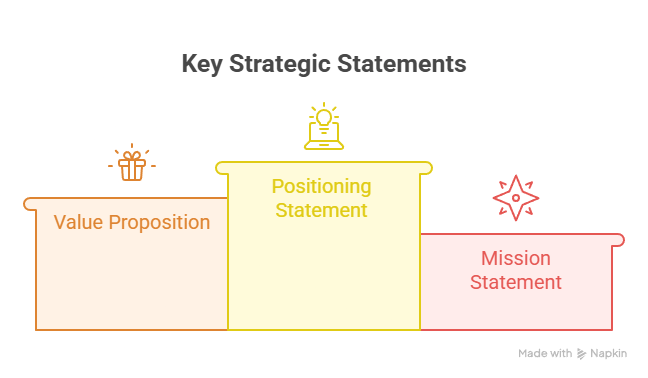
Many people mix up positioning statements, value propositions, and mission statements because they sound similar. But they serve completely different purposes.
This confusion is one reason many brands struggle with inconsistent messaging. One team talks about customer benefits, another talks about company purpose, while another focuses on product features.
The result is mixed messaging that confuses prospects and weakens trust.
Positioning statement
A positioning statement is your internal strategic guide. It explains who you serve, what market you belong to, what makes you different, and why customers should believe you.
It helps your team stay aligned when creating marketing campaigns, products, content, and sales messaging.
Value proposition
A value proposition is more customer-facing. It answers one simple question: “What’s in it for me?”
It focuses on the direct outcome or benefit customers get from your product or service. It is shorter, more tactical, and often appears on landing pages, ads, and sales copy.
Mission statement
A mission statement is different from both. It explains why your company exists. It focuses on your long-term purpose, vision, and direction.
Unlike positioning statements, mission statements are usually public and remain stable for years.
Here’s the easiest way to understand the difference:
| Element | Positioning Statement | Value Proposition | Mission Statement |
| Main Audience | Internal teams | Customers | Employees, customers, public |
| Purpose | Define market position | Explain customer benefit | Explain company purpose |
| Scope | Broad strategic direction | Specific customer value | Long-term company vision |
| Visibility | Mostly internal | Public-facing | Public-facing |
| Focus | Differentiation and market perception | Outcomes and benefits | Purpose and impact |
Here is a simple example using a fictional project management software company:
Positioning Statement:
“For remote creative agencies struggling with scattered workflows, FlowPilot is a project management platform that simplifies team collaboration with visual automation tools. Unlike generic productivity software, FlowPilot is built specifically for creative operations teams.”
Value Proposition:
“Manage projects faster without endless meetings and messy spreadsheets.”
Mission Statement:
“To help creative teams work together more clearly and efficiently.”
Notice the difference.
- The positioning statement defines the market position.
- The value proposition explains the customer benefit.
- The mission statement explains the company’s purpose.
One important insight many brands miss is this:
If your value proposition promises one thing, but your positioning says something different, customers notice the disconnect quickly.
For example, if a brand positions itself as premium and expert-led but constantly advertises low prices and discounts, trust starts to break. Customers become unsure about what the brand truly stands for.
Strong brands make sure all three work together clearly and consistently.
The 5 core components of a positioning statement
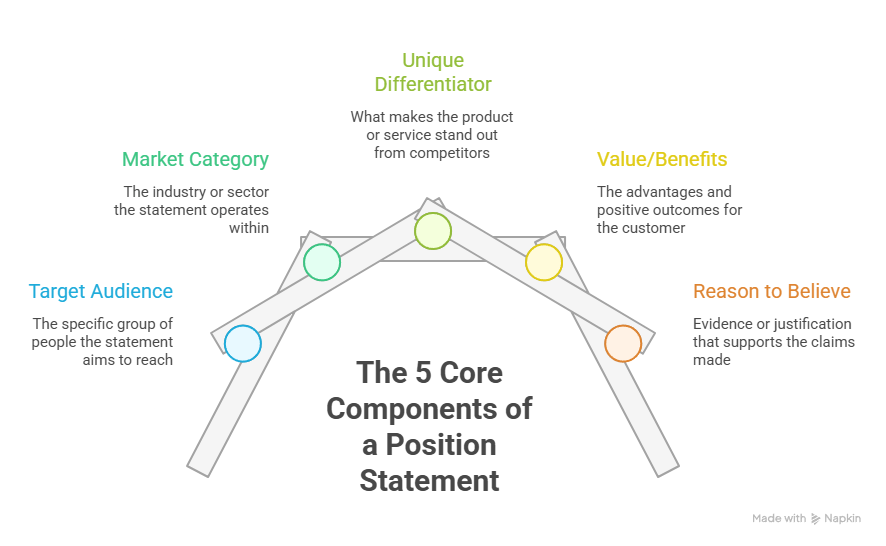
A strong positioning statement is not built from random marketing words. It follows a clear structure.
Most effective positioning statements contain five core parts. If one part is weak or unclear, the entire message becomes harder for customers to understand and trust.
Here’s how each component works.
1. Target audience
This defines exactly who you help.
One of the biggest mistakes businesses make is targeting everybody. “Small business owners” is too broad. Good positioning becomes stronger when the audience becomes more specific.
Instead of saying: “We help businesses grow.”
Say: “We help solo financial advisors automate client reporting.”
The clearer your audience, the easier it becomes to create messaging that feels personal and relevant.
Ask yourself: Who specifically struggles with the problem we solve?
2. Market category/frame of reference
This explains what type of product or service you are.
Customers always compare you to something else. Your positioning should guide that comparison instead of leaving customers confused.
For example, are you:
- a project management tool?
- an AI writing assistant?
- a premium coffee brand?
- a financial education platform?
If customers cannot quickly understand your category, they may ignore your brand completely.
Ask yourself: What alternatives are customers comparing us against?
3. Unique differentiator (point of difference)
This is what separates you from competitors.
Al Ries and Jack Trout explained that strong positioning requires sacrifice. You cannot stand for everything.
Your differentiator should be meaningful and difficult for competitors to copy.
For example:
- Faster onboarding
- Industry specialization
- Better customer experience
- Simpler workflow
- Stronger automation
- Unique business model
Weak differentiation sounds like this:
- “High quality service”
- “Customer-focused”
- “Innovative solutions”
Almost every competitor says the same thing.
Ask yourself: What can we credibly claim that competitors cannot easily copy?
4. Value/benefit
This explains the outcome customers get from choosing you.
Customers care less about features and more about results.
People do not buy accounting software because they love dashboards. They buy it because they want less stress during tax season.
A cybersecurity company once improved conversions by 40% after shifting messaging from “enterprise-grade protection features” to helping CISOs feel confident they would not lose sleep over security breaches.
Ask yourself: What improvement happens in the customer’s life or business after using our product?
5. Reason to believe
This is the proof behind your claims. Without proof, positioning feels like marketing hype.
Your proof could include:
- customer results
- case studies
- years of experience
- awards
- certifications
- user data
- testimonials
The key is credibility.
Ask yourself: What evidence makes customers believe our promise is real?
The best positioning statements combine all five components into one clear, believable message customers can quickly understand and trust.
How to write a positioning statement: step by step guide
Writing a positioning statement becomes much easier when you stop guessing and follow a structured process.
Most weak positioning statements happen because companies rush straight into writing before understanding the market, the customer, or their real advantage.
As April Dunford once said: “A lot of people are using a positioning statement to do positioning.”
In other words, the sentence itself is not the strategy. The research and thinking behind it matter more.
Here is the step-by-step process.
Step 1: Do your competitive research first
Before writing anything, study your competitors carefully. Look at:
- their website headlines
- taglines
- value propositions
- landing pages
- ads
- customer reviews
- positioning language
You are trying to identify two things:
- What every competitor already claims
- What gaps exist in the market
If every company says “easy,” “fast,” and “all-in-one,” those words no longer help customers choose.
Good positioning finds space competitors are ignoring.
Research also helps you avoid generic messaging. A business that skips this step often ends up sounding exactly like everyone else.
Strong positioning starts with understanding both the market and unmet customer needs.
Step 2: Define your target audience with precision
Most businesses define audiences too broadly.
“Small business owners” is not a positioning strategy.
A much stronger audience definition looks like this:
- “Solo consultants struggling to systematize client onboarding”
- “Remote marketing teams managing multiple client approvals”
- “First-time ecommerce founders overwhelmed by inventory management”
Notice the difference.
Specific audiences create stronger messaging because their problems are clearer.
Go beyond demographics like age or company size. Instead, define your audience by:
- frustrations
- goals
- buying behavior
- decision-making process
- fears
- desired outcomes
The more precise your audience, the easier it becomes to own a niche instead of competing with everybody.
Step 3: Identify your real differentiator
This is where many businesses struggle. They mistake features for differentiation.
But customers rarely choose products because of technical specifications alone. They choose products because of the value those features create.
A helpful question from April Dunford is: “Why pick us over an alternative solution to the problem?”
That question forces you to think deeper.
Maybe your differentiator is not your software dashboard. Maybe it is faster onboarding, lower risk, better support, easier implementation, or stronger industry expertise.
For example, Patagonia does not mainly compete on outdoor jacket features. Its positioning focuses heavily on environmental responsibility and purpose-driven buying.
That creates a harder-to-copy advantage.
The best differentiation feels important to customers, not just exciting to your internal team.
Step 4: Draft using a proven template
Once your research is clear, use a simple framework to organize your ideas.
One popular template comes from Geoffrey Moore:
“For [target customer] who [statement of need], [brand/product] is a [market category] that [key benefit]. Unlike [primary competitor], our product [reason to believe].”
Another simpler version is:
“For [people you serve] who [need], [organization] is a [type] providing [service] that [benefit]. Unlike others, we [point of differentiation].”
Here is a weak example: “We provide innovative marketing solutions for businesses.”
This says almost nothing.
Here is a stronger version:
“For B2B SaaS startups struggling to generate demo bookings, GrowthLoop is a content-led SEO agency that helps brands rank in Google and AI search results. Unlike traditional agencies, we focus on both search visibility and AI citation growth.”
The second example feels clearer, more targeted, and easier to remember.
Step 5: Review and stress-test before finalizing
Before finalizing your positioning statement, test its strength.
The Vivaldi Group recommends asking five questions:
- Is it exclusive?
- Is it relevant?
- Is it credible?
- Is it durable?
- Is it actionable?
Your positioning should guide real decisions across marketing, sales, product development, and customer experience.
If your team cannot use the statement to make decisions, it is probably too vague.
The simpler and clearer your positioning becomes, the easier it is for customers to understand, trust, and remember your brand.
Real-world positioning statement examples
The best way to understand positioning statements is to study how real brands position themselves in the market.
Notice how each example focuses on a specific audience, a clear difference, and a believable outcome.
1. Apple
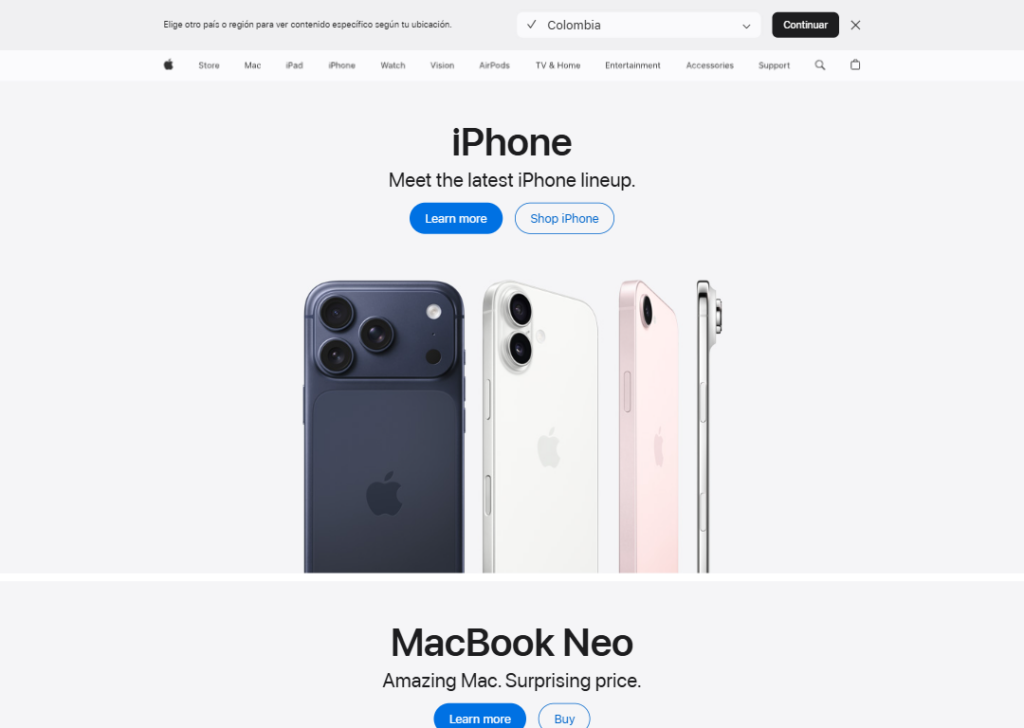
“Apple revolutionized personal technology with the introduction of the Macintosh in 1984. Today, Apple leads the world in innovation with iPhone, iPad, Mac, Apple Watch, and Apple TV. Apple’s five software platforms — iOS, iPadOS, macOS, watchOS, and tvOS — provide seamless experiences across all Apple devices and empower people with breakthrough services including the App Store, Apple Music, Apple Pay, and iCloud. Apple’s more than 100,000 employees are dedicated to making the best products on earth, and to leaving the world better than we found it.”
2. RingCentral
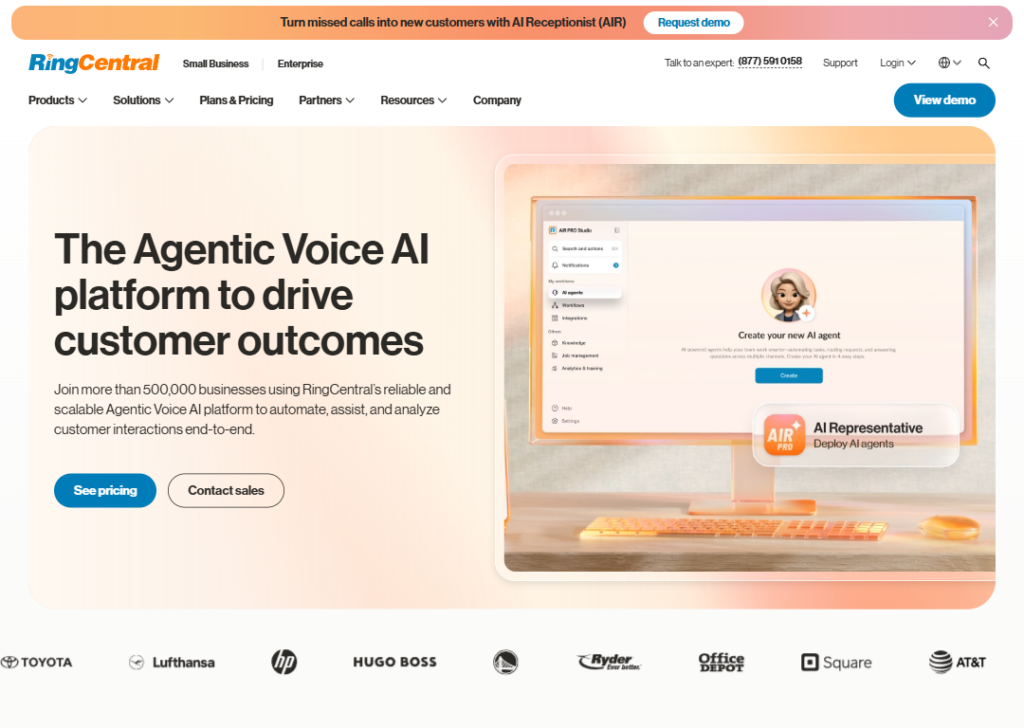
“RingCentral is a leading provider of cloud Message Video Phone™, customer engagement and contact center solutions for businesses worldwide. More flexible and cost-effective than legacy on-premise PBX and video conferencing systems that it replaces, RingCentral empowers modern mobile and distributed workforces to communicate, collaborate, and connect via any mode, any device, and any location.”
3. Alexa
“Alexa.com is a trusted source of insights into digital behavior that marketers use to help win their audience and accelerate growth. Subscribers to the Alexa Marketing Stack leverage rich competitor and audience insights that help them better understand their audience, discover opportunities for growth across multiple marketing channels, and manage the day-to-day workflows of planning, creating, optimizing, promoting, and measuring the effectiveness of their content marketing.”
4. Mailchimp
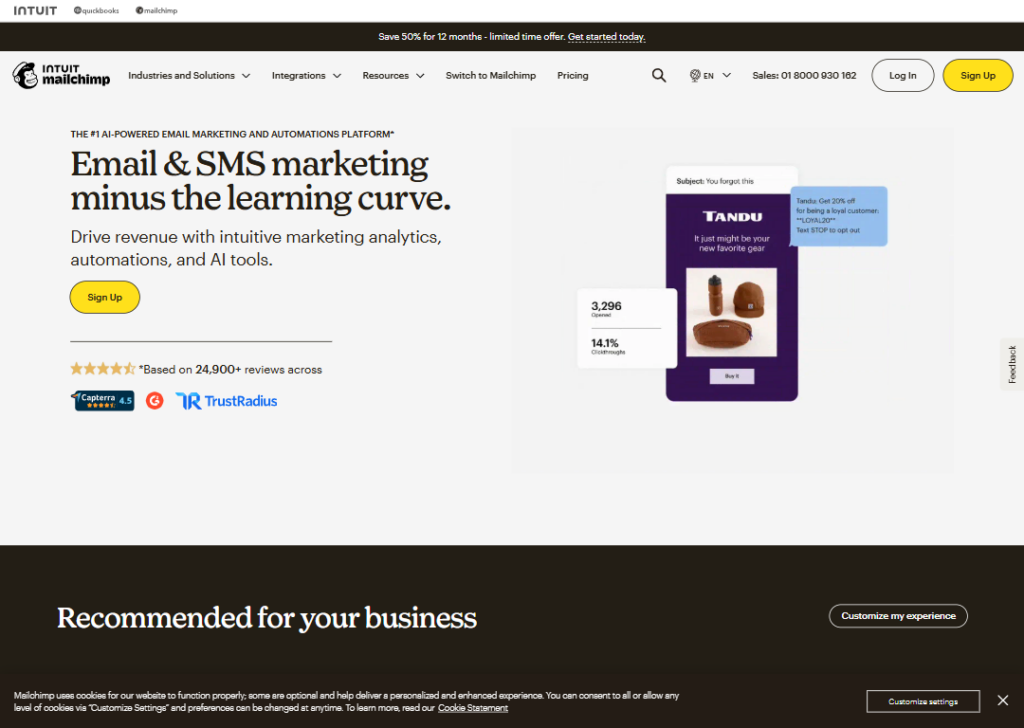
“Mailchimp is an all-in-one Marketing Platform for small business. We empower millions of customers around the world to start and grow their businesses with our smart marketing technology, award-winning support, and inspiring content.”
5. Slack
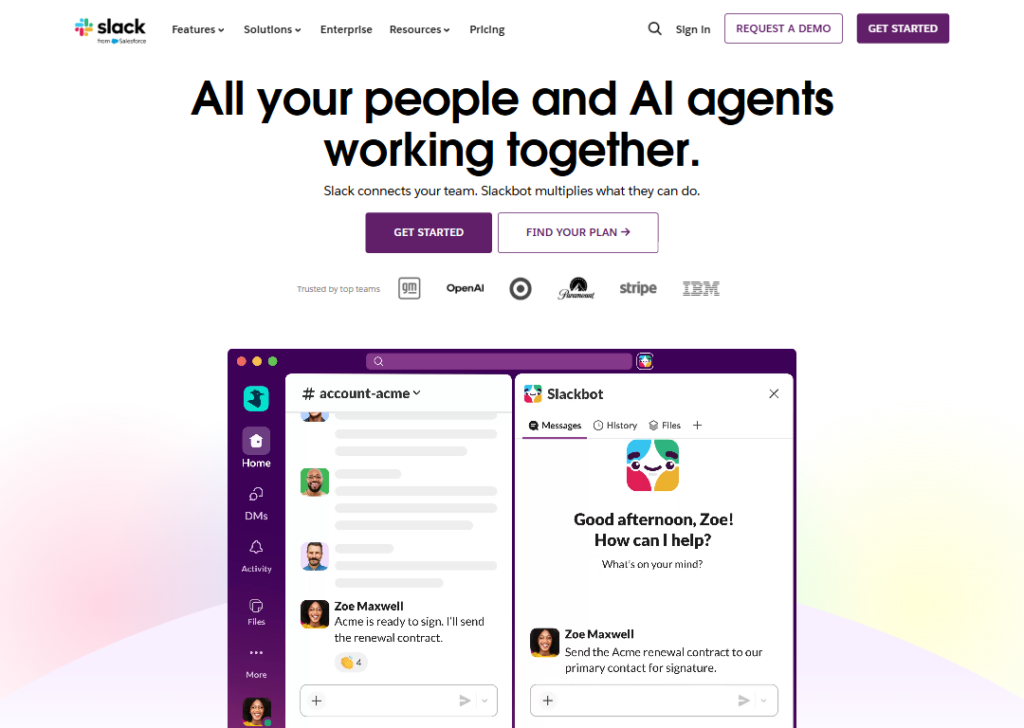
“Slack is the collaboration hub that brings the right people, information, and tools together to get work done. From Fortune 100 companies to corner markets, millions of people around the world use Slack to connect their teams, unify their systems, and drive their business forward.”
6. Nike
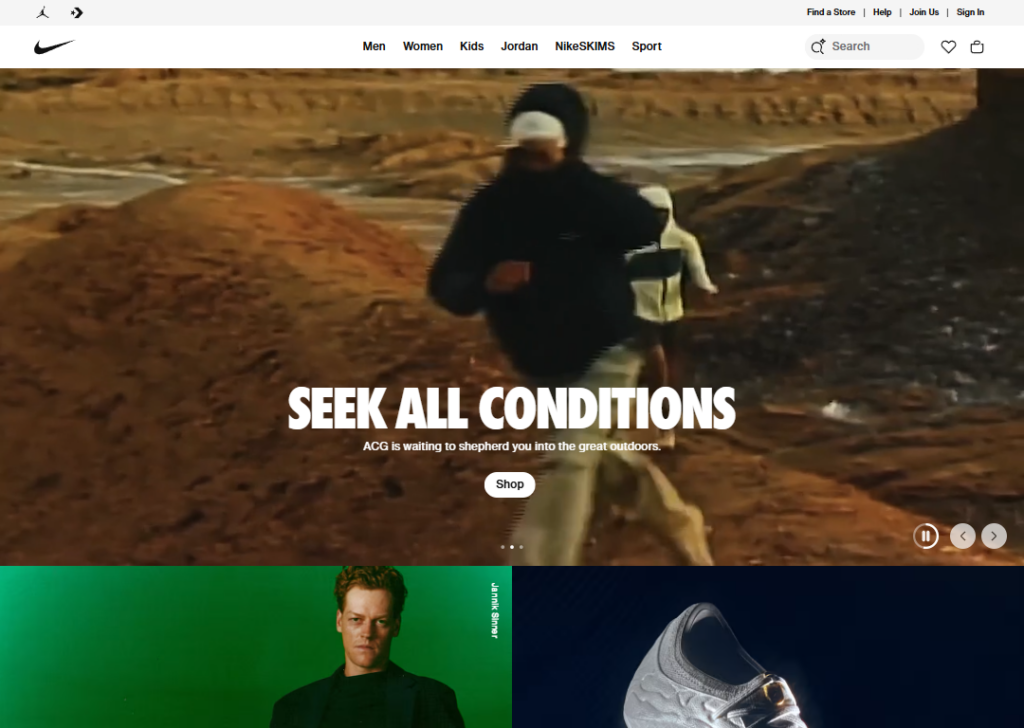
“At Nike, we’re committed to creating a better, more sustainable future for our people, planet, and communities through the power of sport.”
5 common mistakes that undermine your positioning statement
Even good businesses end up with weak positioning because of a few avoidable mistakes. The problem is not effort, it’s direction.
Here are the most common issues that quietly weaken positioning.
1. Being too vague or generic
This is the most common mistake. Statements like:
- “We deliver excellent service”
- “We provide innovative solutions”
- “We help businesses grow”
Sound nice, but they mean nothing. Every competitor can say the same thing.
If your positioning could fit 10,000 other companies, it is not positioning.
Good positioning is specific enough that only a few businesses can honestly claim it.
2. Focusing on what you sell, not what the buyer becomes
Many brands describe their product instead of the customer’s transformation. For example:
“We sell project management software” This is weak.
A stronger approach focuses on outcome: “We help remote teams finish projects without constant back-and-forth messaging”
As noted by April Dunford, customers are always comparing options based on what they are trying to achieve, not just what is being sold.
If you miss that shift, your message feels product-heavy and less persuasive.
3. Treating positioning as a marketing-only task
Positioning is not just a marketing exercise. It affects sales, product design, customer support, pricing, and even hiring.
When only the marketing team defines positioning, the result is often disconnected messaging across the company.
4. Overpromising without proof
Bold claims without evidence damage trust quickly. If you say:
- “We are the fastest”
- “We are the best”
- “We guarantee results”
But cannot prove it, customers will stop believing you.
Strong positioning always includes a “reason to believe,” such as data, case studies, or real results.
For example, brands like have grown by backing claims with measurable user outcomes like retention and conversion rates.
5. Setting it and forgetting it
Markets change. Competitors evolve. Customer expectations shift.
A positioning statement that worked three years ago may no longer stand out today.
If you don’t adjust it, you risk blending into the market without realizing it.
Strong positioning is not a one-time document. It is a living guide that should evolve with your market.
Free positioning statement template
Here is a simple template you can copy and fill in to create your own positioning statement.
Template:
“For [target audience] who [specific need or problem], [your brand/product] is a [market category] that [key benefit or outcome]. Unlike [main competitor or alternative], we [unique differentiator] because [reason to believe / proof].”
Example (filled):
“For solo consultants who struggle to manage client onboarding, FlowPilot is a client workflow platform that helps them automate onboarding and reduce manual work. Unlike general project tools, we are built specifically for service-based consultants because we combine automation templates with simple client tracking.”
Quick checklist before you use it:
- Is the audience specific (not broad)?
- Is the category clear?
- Is the benefit focused on outcome, not features?
- Is the differentiator real and not generic?
- Is there proof or evidence to support it?
If you can answer “yes” to all five, your positioning statement is strong enough to guide your brand decisions.
Wrapping up
Your positioning statement is not just another marketing sentence. It shapes how customers see your brand, how your team communicates, and why people choose you over competitors.
The clearer your positioning becomes, the easier it is to attract the right audience, build trust, and grow consistently.
But writing strong positioning takes more than filling in a template. You need the right messaging, customer understanding, and market direction behind it.
That’s where Block Agency can help.
We help brands create clear copywriting and messaging that make their offers easier to understand, trust, and buy from.
If your brand messaging still feels unclear or too generic, this might be the right time to fix it. Talk to us here: hey@blockagency.co
Frequently asked questions
How often should a positioning statement change?
A positioning statement should be reviewed regularly as markets, customer behavior, and competitors change. Businesses do not need to rewrite it every few months, but they should update it when their audience, product direction, or market position changes significantly.
How long should a positioning statement be?
A positioning statement is usually one or two sentences long. It should be clear, specific, and easy for internal teams to understand. The goal is not to sound clever but to explain the brand’s audience, category, difference, and value in the simplest way possible.
What is the difference between a positioning statement and a value proposition?
A positioning statement is mainly used internally to guide strategy and branding decisions. A value proposition is customer-facing and focuses on the direct benefit customers receive. The positioning statement defines the market position, while the value proposition explains why the offer is valuable to buyers specifically.